Where the Prairie Meets the Factory
"From Chicago's innovation to Carbondale's craftsmanship, discover the brands keeping Illinois manufacturing strong."
Innovation on the Prairie
In Illinois, where the Great Lakes meet the Great Plains, manufacturing has always been about combining the best of both worlds: the innovation of the city and the craftsmanship of the countryside. From the skyscrapers of Chicago to the farms of central Illinois, this state has a long tradition of making things that matter. The brands featured here represent the diversity of Illinois manufacturing: exotic chocolate that travels the world through taste, ethically manufactured denim, high-tech automotive accessories, pinball machines that light up game rooms, and furniture crafted from reclaimed Midwestern barn wood. Each product carries the DNA of Illinois: practical innovation, honest craftsmanship, and the belief that if you're going to make something, it might as well be the best.
Vosges Haut-Chocolat
"Exotic chocolate truffles infused with rare spices, herbs, and botanicals."

The Story Behind the Brand
Vosges Haut-Chocolat represents the intersection of culinary artistry and global exploration, founded by Katrina Markoff, a visionary chocolatier who honed her skills at Le Cordon Bleu in Paris and apprenticed under the legendary Ferran Adrià in Spain.
The company was founded with a mission to 'Travel the World through Chocolate.' This ethos is not merely a marketing tagline but the core operational philosophy of the brand, which seeks to open minds and palates by fusing high-quality cacao with rare, indigenous spices, flowers, roots, and herbs sourced from around the globe.
Based in Chicago, Illinois, the company operates a production facility that is as conscientious as it is creative; the chocolate is crafted in a certified organic manufacturing facility that runs on 100% renewable energy, underscoring a deep commitment to environmental sustainability alongside culinary excellence.
Innovation Meets Craftsmanship
The manufacturing process is a meticulous blend of high art and food science, where proprietary blends of deep dark chocolate and creamy milk chocolate are infused with ingredients that might initially seem contradictory—such as Hungarian paprika, Indian curry powder, or high-phenolic olive oil—to create harmonious flavor profiles.
One of the brand's most iconic innovations is the Mo's Milk Chocolate Bacon Bar, which pioneered the sweet-savory bacon chocolate trend that swept the industry.
The brand's 'Exotic Truffle Collection' serves as a guided tasting journey, packaged in signature purple boxes that include detailed storytelling booklets explaining the origin and cultural significance of ingredients like I.G.P.
Piemonte hazelnuts from Italy or yuzu from China.
As a certified Woman-Owned Business Enterprise, Vosges has garnered significant acclaim, including Markoff being named a '40 Under 40' by Fortune Magazine and receiving the Bon Appétit Food Artisan of the Year Award.
Dearborn Denim & Apparel
"Ethically manufactured stretch and 100% cotton denim jeans, cut and sewn directly in Chicago."

The Story Behind the Brand
Dearborn Denim & Apparel was founded in 2016 by Robert McMillan, a former bond trader who pivoted to manufacturing with a singular, ambitious goal: to revitalize the American apparel industry by producing high-quality jeans at a fair, accessible price point.
Operating under a strictly direct-to-consumer model, the brand distinguishes itself by maintaining a fully localized supply chain where the design, cutting, sewing, and finishing of every garment take place in their own factory in the Park Ridge area of Chicago.
This hands-on approach allows for rigorous quality control that mass-market brands typically lack, ensuring that every pair of jeans meets a high standard of durability and fit before leaving the sewing floor.
The manufacturing process is rooted in the use of premium materials; Dearborn sources its denim from some of the last remaining premier mills, including Mount Vernon Mills in South Carolina for their American cotton lines and Candiani in Italy for sustainable stretch fabrics.
The Art of Handcrafted Excellence
The manufacturing process at Dearborn Denim emphasizes local control and quality assurance.
The denim fabric arrives in bolts and is inspected for defects before being cut using patterns optimized for fit and fabric utilization.
The cutting process uses industrial cutting machines that can handle multiple layers of fabric simultaneously, ensuring consistency across production runs.
Sewing operations take place on-site in their Chicago facility, where skilled operators use industrial sewing machines to construct jeans according to specifications developed through extensive fit testing.
Key construction details include reinforced stress points, quality hardware sourced from American suppliers, and meticulous attention to seam construction.
The brand was created to counter the prevailing trend of outsourcing, proving that American-made clothing does not have to come with a luxury markup; by selling directly to customers and avoiding wholesale markups, they offer jeans at a price point comparable to imported legacy brands.
Their product line has expanded beyond their signature stretch denim jeans to include belts, shirts, and tees, all crafted with the same domestic ethos.
WeatherTech
"Laser-measured automotive floor liners and non-toxic pet feeding systems made in Bolingbrook."
The Story Behind the Brand
WeatherTech, headquartered in Bolingbrook, Illinois, is perhaps the most visible and aggressive champion of the 'Made in America' movement in the modern consumer goods sector.
Founded in 1989 by David MacNeil out of personal dissatisfaction with the quality of imported automotive floor mats, the company made the strategic decision to reshore its entire production process to the United States.
WeatherTech utilizes sophisticated laser technology to digitally measure the interior surfaces of specific vehicle makes and models, ensuring a precise, custom fit for their flagship FloorLiner™ products that protect vehicle carpets from fluids and debris.
The manufacturing process is vertically integrated within their Illinois campus, involving advanced thermoplastic elastomer (TPE) compounds and heavy-duty American-made machinery to produce goods that are durable, recyclable, and capable of withstanding extreme temperature fluctuations.
A Commitment to Quality
WeatherTech's manufacturing process exemplifies precision engineering and vertical integration.
The process begins with developing digital models of vehicle interiors using proprietary laser-scanning technology that captures the exact contours and dimensions of each vehicle model.
This data is used to create precision molds that produce FloorLiners with perfect fit and maximum protection.
The production uses advanced thermoplastic elastomer (TPE) compounds that are engineered to be flexible yet durable, providing excellent grip while remaining easy to clean.
The manufacturing facility operates with state-of-the-art injection molding equipment that ensures consistent quality and precise dimensional control.
Beyond automotive accessories, WeatherTech has expanded its manufacturing footprint into the home and pet categories with equal vigor.
Their 'PetComfort' line was born from MacNeil's personal concern over toxic chemicals and radiation often found in imported pet products; in response, the company built a dedicated factory in Illinois to produce non-toxic, NSF-certified stainless steel and antibiotic plastic pet bowls.
This expansion demonstrates the brand's commitment to controlling every aspect of quality, from design and engineering to tooling and manufacturing.
Stern Pinball
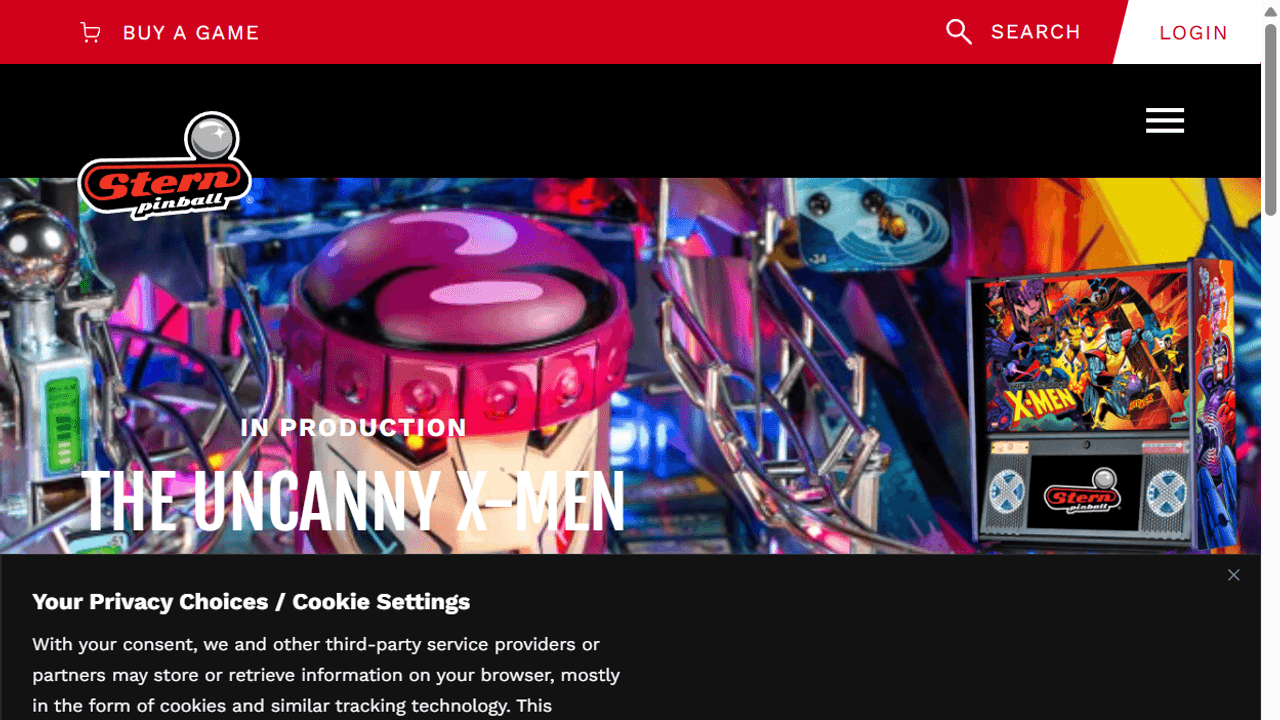
"Commercial-quality mechanical pinball machines featuring licensed pop culture themes like Star Wars and Jurassic Park."
A Family Legacy
Stern Pinball, Inc.
stands as the oldest and largest producer of arcade-quality pinball games in the world, maintaining Chicago's historic reputation as the global capital of coin-operated amusements.
Headquartered just outside Chicago in Elk Grove Village, the company traces its lineage through the Stern family, with Gary Stern—son of industry pioneer Sam Stern—leading the business through the modern revitalization of the pinball industry.
The manufacturing process at Stern is a complex orchestration of electrical engineering, mechanical assembly, and artistic design, all conducted under one roof.
Each machine is hand-assembled on a moving production line where thousands of individual parts—from solenoids, wiring harnesses, and flipper mechanisms to playfield ramps and intricate LED lighting systems—are integrated into a cohesive, interactive game.
The playfields are often screen-printed or digitally printed with intricate artwork before being populated with mechanical toys and switches.
The Art of Handcrafted Excellence
The pinball manufacturing process at Stern combines traditional craftsmanship with modern technology.
It begins with designing and engineering new game concepts, including mechanical layouts, electronic systems, and artistic themes.
The playfield design involves CAD software to optimize ball flow and shot geometry, ensuring engaging gameplay.
Manufacturing starts with fabricating the cabinet from high-quality wood and laminate, which provides the structural foundation for the machine.
The playfield is cut from sheet metal using CNC routers, with precise hole patterns for posts, ramps, and mechanical components.
Electronic components are assembled in-house, including circuit boards that control game logic, sound, and lighting effects.
The wiring harness is meticulously assembled by hand, connecting hundreds of components.
Mechanical assemblies, including flippers, bumpers, and pop bumpers, are tested for proper operation before installation.
Software development creates the unique gameplay experience for each machine.
The final assembly involves integrating all systems, programming the game code, and conducting thorough testing.
Stern is renowned for its licensing partnerships with major global franchises, creating machines based on 'Star Wars', 'Jurassic Park', 'The Walking Dead', and legendary rock bands.
Sangamon Reclaimed
"Handcrafted heirloom furniture and American flags made from reclaimed midwestern barn wood."

The Story Behind the Brand
Sangamon Reclaimed is a Springfield-based woodworking company with a profound mission to preserve the history of the American Midwest by repurposing materials from the region's agricultural past.
Originally founded by firefighter and Air Force veteran Brian Frieze, who began by dismantling a single barn to build a dining table, the company has evolved under the leadership of Amanda Compton to become a premier producer of heirloom-quality furniture and decor.
The manufacturing process begins with the careful, labor-intensive deconstruction of dilapidated 19th and early 20th-century barns across Illinois and the surrounding Sangamon River Valley.
The team salvages old-growth timber—often oak, walnut, and pine species that are no longer commercially available in such quality—and processes it in their Springfield workshop.
This involves denailing the wood, kiln-drying it to remove moisture and pests, and milling the rough lumber into workable stock while meticulously preserving the original saw marks, nail holes, and patina that tell the wood's century-old story.
The Art of Handcrafted Excellence
The woodworking process at Sangamon Reclaimed is a blend of historical preservation and modern craftsmanship.
The process begins with sourcing barns slated for demolition, where skilled crews carefully dismantle structures to salvage usable lumber.
Each beam and plank is inspected for quality, with damaged sections cut away and usable portions saved.
The reclaimed wood is stacked and air-dried for months before being processed in industrial kilns that bring moisture content down to 6-8%, preventing future warping or cracking.
The milling process involves running lumber through planers and jointers to create smooth, workable surfaces while preserving the character marks that give each piece its unique story.
The design phase involves creating furniture that showcases the wood's natural beauty, often leaving saw marks, nail holes, and weathering visible as design elements rather than defects.
Construction uses traditional joinery techniques including mortise-and-tenon joints, dovetail joinery, and hand-cut dove tails that ensure structural integrity without relying on modern fasteners.
Finishing involves applying natural oils and waxes that enhance the wood's grain and provide protection while maintaining the authentic patina.
A standout item in their catalog is their line of wooden American flags, which are part of their 'Flags for Heroes' program.