Live Free and Craft Well
"From lobster shacks to lighthouse workshops, Maine makers work with the sea and forest."
Coastal Craftsmanship
Maine's manufacturing tradition is written in its forests and carved by its coastline. From the paper mills of the north to the boatyards of the coast, from the blueberry barrens of the east to the potato farms of the west, Maine's makers understand that quality is everything. The brands featured here represent the diversity of Maine's manufacturing: tote bags crafted from recycled sails, precision-turned pepper mills from local wood, fully integrated supply chains for jiu-jitsu gear and denim, hand-woven blankets with natural dyes, and moccasins sewn with traditional techniques. Each product carries Maine's DNA: respect for natural resources, commitment to durability, and the understanding that what we make should honor the land and sea that sustain us.
Sea Bags
"Tote bags and accessories handcrafted from recycled sails."

Innovation Born from Necessity
Sea Bags is a quintessential Maine lifestyle brand that has revolutionized the concept of upcycling by transforming retired sailcloth into durable, high-fashion accessories.
Founded in 1999 on the working waterfront of Portland, Maine, the company was established with a mission to keep sails out of landfills.
The manufacturing process is intensely local and sustainable; Sea Bags sources sails directly from passionate boaters across the country, having saved over 700 tons of material to date.
Once collected, the sails are washed and hand-cut in their Maine workshop.
The cutters are trained to preserve unique character marks—such as stitching, rust spots, or sail numbers—ensuring that no two bags are exactly alike.
The inherent durability of sailcloth, designed to withstand rigorous ocean conditions, translates into bags that are water-resistant and virtually indestructible.
Construction involves heavy-duty stitching and the brand's signature hand-spliced hemp rope handles, which contribute to the nautical aesthetic.
The Art of Handcrafted Excellence
The bag-making process at Sea Bags begins with sourcing sails from boaters nationwide, with many coming from the Maine coast.
Each sail is carefully inspected for quality and potential, then thoroughly cleaned to remove salt and dirt.
The cleaning process is critical—it prepares the fabric for cutting while preserving its character and history.
Once clean, sails are laid flat and patterns are strategically placed to maximize both yield and aesthetic appeal.
The cutting process is performed by skilled artisans who understand sail construction and can identify the strongest areas of the fabric.
Each piece is marked and cut by hand, preserving unique features like sail numbers, stitching patterns, and worn areas that tell the sail's story.
Construction uses heavy-duty thread and techniques borrowed from sailmaking, including flat-felled seams that are both strong and weather-resistant.
The signature rope handles are hand-spliced using traditional nautical techniques, creating durable handles that develop a beautiful patina with use.
Each completed bag is inspected for quality and craftsmanship before being tagged with information about the sail's origins.
Fletchers Mill
"Precision-turned wooden pepper mills, salt mills, and rolling pins."

Innovation Born from Necessity
Fletchers Mill is a family-owned manufacturer based in New Vineyard, Maine, renowned for producing the finest wooden culinary tools in America.
The Fletcher family's history in wood manufacturing dates back to 1971 with the Forster Manufacturing Company.
In 1994, brothers Doug, Gary, and Jody Fletcher launched Fletchers Mill to focus specifically on high-quality gourmet kitchenware.
The company is unique in its vertical integration; they control the entire production process from raw log to finished product.
They source sustainable hardwoods—primarily maple and cherry—from local forestry stewardship programs in Maine.
The wood is dried in their own kilns to ensure stability before being turned on lathes by skilled woodworkers.
The defining feature of their mills is the patented 'Lock & Grind' mechanism, which utilizes a stainless steel two-step grinding system for pepper and a crushing mechanism for salt.
This design allows for a wide range of consistent grinds and prevents the setting from loosening during use.
A Commitment to Quality
The mill-making process at Fletchers Mill begins with sourcing sustainable hardwoods from Maine forests managed under state forestry stewardship programs.
Logs are selected for straight grain and minimal defects, then milled into boards that are sticker-stacked and air-dried before being placed in the company's kilns.
The kiln-drying process is carefully controlled to achieve 6-8% moisture content, which is optimal for stability and prevents warping.
After drying, wood is acclimated in the workshop before being turned on precision lathes.
The turning process requires skilled craftsmen who understand wood grain and can create pieces that are both beautiful and functional.
The 'Lock & Grind' mechanism is assembled using precisionmachined stainless steel components that are manufactured to exact tolerances.
The grinding mechanism is tested for performance and durability before the mill is assembled.
Assembly involves fitting the mechanism into the wooden body, ensuring smooth operation and proper alignment.
Each mill is finished with food-safe oils or non-toxic paints, depending on the model.
Final inspection includes testing the grinding mechanism, checking for smooth rotation, and ensuring the mill meets the company's exacting standards for quality and performance.
Origin Maine
"American-made Jiu-Jitsu gis, workwear, denim, and leather boots."
A Living Tradition
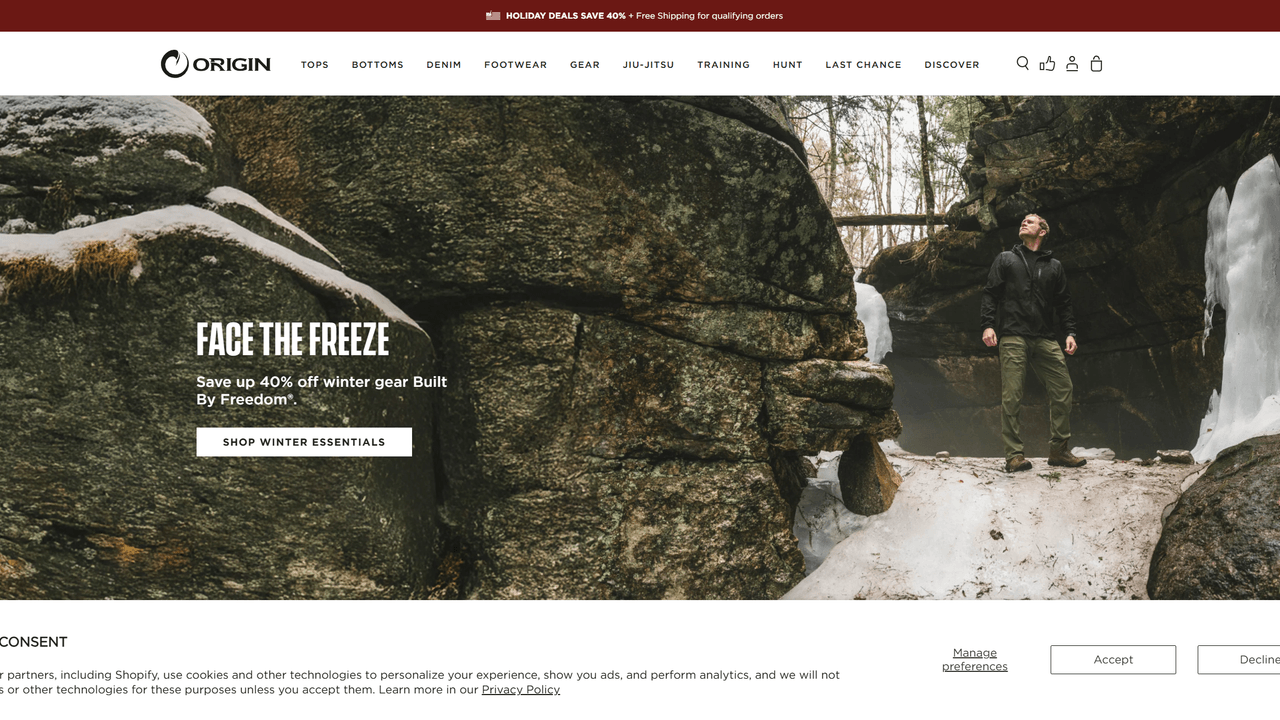
Origin Maine (ORIGIN) is a vanguard of the American manufacturing renaissance, co-owned by entrepreneur Pete Roberts and former Navy SEAL Jocko Willink.
Headquartered in the rural foothills of Western Maine (Farmington and Jay), Origin was founded with the audacious goal of reshoring the production of Brazilian Jiu-Jitsu gis, a product that requires a specific heavy weave that had disappeared from US textile mills.
Roberts purchased forests for raw materials and scoured the country for defunct looms, restoring them to working order to create a vertically integrated supply chain he calls 'Factory Blockchain.' This allows Origin to weave its own fabric, cut, and sew its garments entirely in Maine.
The brand has since expanded into a comprehensive lifestyle company, producing heavy-duty workwear, 'Delta 68' denim jeans, and nutritional supplements.
A significant recent addition is their footwear division, which manufactures rugged leather boots using traditional Goodyear welt and moc-toe constructions.
Time-Honored Techniques
The manufacturing process at Origin Maine is unique in its vertical integration and commitment to American production.
It begins with sourcing raw materials, including cotton for denim and leather for boots, from American suppliers.
For denim, the company operates its own weaving facility, using restored vintage looms to create heavy-weight fabrics with authentic character.
The weaving process is carefully monitored to ensure quality and consistency, with each bolt of fabric inspected before it moves to cutting.
Cutting operations use automated cutting machines that optimize fabric utilization while maintaining precision.
Sewing is performed by skilled operators using industrial sewing machines, with each garment assembled according to strict quality standards.
For boots, the process involves cutting leather components, shaping them on forms, and using traditional construction methods like Goodyear welting, which allows for resoling and repair.
Each product undergoes quality inspection before being packaged and shipped.
The entire process is documented and tracked, creating the 'Factory Blockchain' that verifies the American origin of every component and process.
Swans Island Company
"Hand-woven, hand-dyed heirloom wool blankets."

The Founder's Vision
Swans Island Company is a premier textile studio that produces some of the world's finest hand-woven blankets, representing a commitment to slow, artisanal luxury.
Founded in 1992 by John and Carolyn Grace on the remote Swans Island, Maine, the company sought to revive pre-industrial blanket-making techniques.
In 2004, ownership passed to Bill Laurita, who moved operations to a farmhouse in Northport, Maine, to expand capacity while strictly maintaining the founders' methods.
The manufacturing process is defined by its purity and patience; Swans Island uses certified organic Merino wool and local Corriedale fleece, ensuring the fiber is free from harsh chemicals.
The wool is dyed in-house using all-natural, plant-based dyes—such as indigo, cochineal, and goldenrod—which produce rich, harmonic colors that synthetic dyes cannot replicate.
The dyed yarn is then woven on vintage looms by a small team of master weavers, a process that requires immense skill and time.
Their 'Summer Weight Blanket' famously won the Smithsonian Blue Ribbon for Craft.
The Art of Handcrafted Excellence
The blanket-making process at Swans Island begins with sourcing certified organic Merino wool and local Corriedale fleece from farms that practice sustainable sheep raising.
The wool is scoured (cleaned) using gentle, environmentally friendly methods that preserve the fiber's natural properties.
After scouring, the wool is carded to align the fibers, then spun into yarn using traditional spinning techniques that create strong, consistent threads.
The dyeing process uses all-natural dyes derived from plants, minerals, and insects.
Indigo leaves are fermented to create the blue dye, cochineal insects provide red shades, and goldenrod flowers yield yellows.
The dyeing process requires skill and patience, as natural dyes behave differently than synthetic ones and require careful temperature and pH control.
After dyeing, yarn is wound into skeins and dried.
The weaving process uses vintage floor looms operated by master weavers who understand both the technical aspects of weaving and the artistic aspects of design.
Each blanket is woven one at a time, with the weaver controlling tension, pattern, and quality throughout the process.
After weaving, blankets are carefully inspected and finished with hand-tipped fringes or bound edges.
Final finishing includes gentle washing to enhance softness and drape.
Quoddy
"Handsewn leather moccasins, boat shoes, and slippers made to order."
A Living Tradition
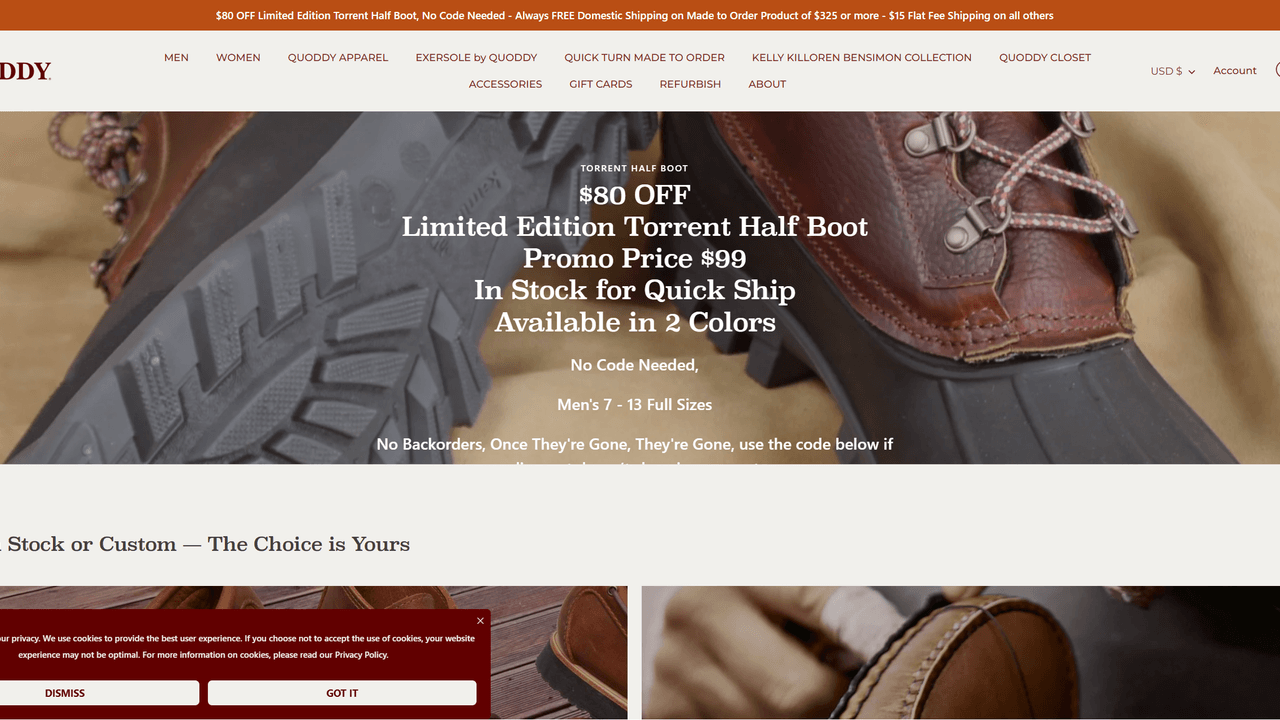
Quoddy is a legendary Maine footwear brand that keeps the centuries-old tradition of handsewn moccasin construction alive.
Based in Lewiston, Maine—a historic hub of American shoemaking—Quoddy traces its lineage to 1947 when Jack and Anne Spiegel began the business.
The brand was revived in the late 1990s by Kevin and Kirsten Shorey, who sought to preserve the art of hand-sewing in an era of mass-produced, cemented footwear.
Quoddy shoes are constructed using a true moccasin method, where the leather wraps completely around the foot, creating a 'glove-like' fit that adapts to the wearer's foot shape over time.
The manufacturing process is intensely manual; skilled artisans use two needles and an awl to hand-stitch the leather uppers to the soles, a technique that requires significant physical strength and dexterity.
Quoddy sources premium leathers, often from the renowned Horween Tannery in Chicago, ensuring that the materials are as durable as the construction.
Because the shoes are stitched rather than glued, they are fully resoleable.
The Art of Handcrafted Excellence
The shoemaking process at Quoddy begins with selecting premium leathers, primarily from Horween Tannery in Chicago, known for their quality and durability.
Each hide is inspected for defects and characteristics that will determine its best use.
Patterns are laid out on the leather and hand-cut, allowing the craftsman to optimize yield while placing different parts of the hide where they'll perform best.
The upper construction involves shaping the leather pieces around a last (foot form), which determines the shoe's shape and fit.
The most distinctive aspect of Quoddy's process is the hand-stitching, where skilled craftspeople use an awl to create holes and then stitch the upper to the sole using traditional techniques.
This hand-stitching is done with strong waxed thread that creates a permanent, repairable bond.
The hand-stitched construction allows the shoe to conform to the wearer's foot over time, creating a custom fit that improves with wear.
After stitching, shoes are finished with edge burnishing and sole preparation.
Each shoe is hand-inspected for quality before being shipped.
Because of their construction method, Quoddy shoes can be resoled multiple times, extending their lifespan significantly.