Where the Forest Meets the Sea
"From the Cascades to the Pacific, Oregon makers work with nature's bounty."
Pacific Northwest Craft
Oregon's manufacturing tradition is written in its forests and carved by its coast. From the timber mills of the east to the craft breweries of Portland, from the wine valleys to the fishing ports, Oregon's makers understand that sustainability is not optional. The brands featured here represent the diversity of Oregon's manufacturing: heritage woolens that trace back to 1863, upcycled accessories from bicycle parts, hand-harvested sea salt from pristine bays, leather goods crafted by immigrant artisans, innovative hats with functional design, and urban apiaries producing pure beeswax products. Each product carries Oregon's DNA: environmental stewardship, outdoor resilience, and the pioneering spirit of making things last.
Pendleton Woolen Mills
"Heritage woolen blankets, apparel, and fabrics made in Pacific Northwest mills since 1863."

A Family Legacy
Pendleton Woolen Mills is not merely a company; it is an institution of American textile history.
Founded in 1863 by Thomas Kay, an English master weaver who brought his expertise to the nascent wool industry of Oregon, the company has remained in the hands of the Bishop family for six generations.
This continuity of ownership is rare in American manufacturing, allowing Pendleton to maintain a long-term perspective that prioritizes legacy over quarterly profits.
The company's survival through the deindustrialization waves of the late 20th century—which decimated the American textile sector, closing over 800 mills—is a testament to its strategic vertical integration and brand equity.
Pendleton's operational model is defined by its control over the entire supply chain, a concept they term 'from fleece to fabric.'.
How It's Made
The manufacturing process begins with the procurement of raw wool.
Pendleton buyers scour the market for specific grades of wool, looking for the optimal crimp and micron count to ensure the durability and softness characteristic of their products.
Much of this wool is sourced from local ranchers in the Pacific Northwest, supporting the regional agricultural economy.
The manufacturing process is split between two historic facilities: the Washougal mill in Washington and the Pendleton mill in Oregon.
In Washougal, raw wool is scoured (cleaned), carded (aligned), and spun into yarn.
The dye house utilizes advanced computer technology to manage color formulas, ensuring that the vibrant hues of their plaids and patterns remain consistent across production runs.
The Pendleton mill houses the majestic Jacquard looms—two-story machines capable of weaving complex, reversible patterns.
Unlike dobby looms, which produce simple geometric repeats, Jacquard looms control individual warp threads, allowing for the creation of the pictorial and intricate geometric designs found in the 'Chief Joseph' and 'National Park' blankets.
Cycle Dog
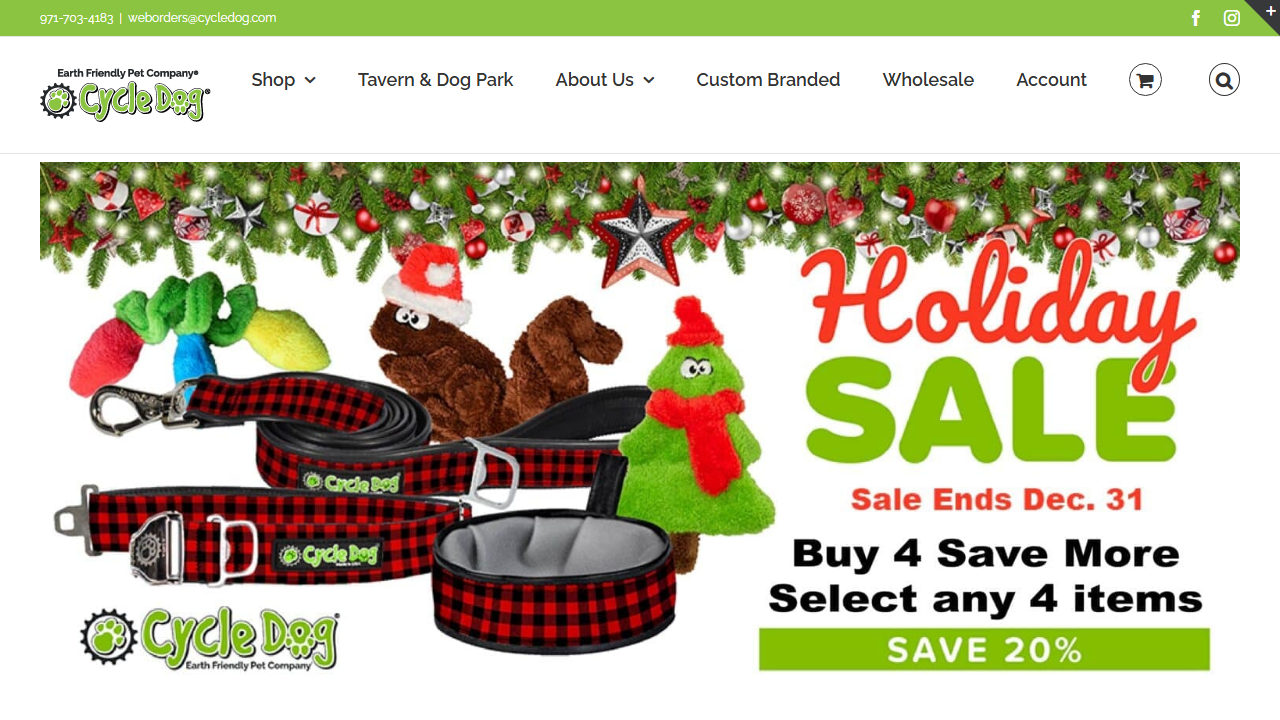
"Upcycled dog collars and accessories made from reclaimed bicycle inner tubes."
The Story Behind the Brand
Cycle Dog represents the modern, eco-centric face of Oregon manufacturing.
Founded in 2009 by Lanette Fidrych, a former Nike employee, the company was born from a convergence of Portland's two dominant subcultures: cycling and pet ownership.
Confronted with the environmental reality that bicycle inner tubes are non-recyclable and persist in landfills, Fidrych devised a method to repurpose this durable, waterproof rubber into dog collars.
The manufacturing process begins with a reverse supply chain.
The company partners with bike shops and retailers across the country to collect used inner tubes, diverting millions from landfills annually.
This feedstock is inconsistent by nature—tubes vary in brand, thickness, and wear—requiring a manufacturing process that is more artisanal than automated.
Innovation Meets Craftsmanship
The production takes place in Portland, where a team of approximately 30 makers creates the products.
The rubber is cleaned, cut, and sewn onto a backing of recycled PET webbing (made from plastic bottles).
This 'sewing' of rubber is technically demanding; it requires heavy-duty machines and skilled operators to ensure the stitching does not perforate the rubber in a way that compromises its structural integrity.
The brand's signature innovation is the 'Pup Top,' a patented bottle opener integrated into the collar's leash attachment.
This feature perfectly encapsulates the brand's 'giftable' appeal: it is functional, whimsical, and speaks to the lifestyle of the owner (hiking, drinking a beer after a ride).
Cycle Dog has also pioneered an experiential retail model.
Their Portland headquarters is not just a factory; it includes a retail showroom and an indoor dog park and tavern.
This integration of production, retail, and community space turns the act of buying a dog collar into a social event, deepening customer loyalty.
Jacobsen Salt Co.
"Hand-harvested sea salt from Netarts Bay with distinctive pyramid-shaped flakes."

The Story Behind the Brand
Jacobsen Salt Co., founded in 2011 by Ben Jacobsen, holds the distinction of being the first company to harvest salt on the Oregon Coast since the 1800s.
The company's existence is a result of rigorous site selection.
Jacobsen spent years testing water samples from 27 different bays along the Pacific Northwest coast before selecting Netarts Bay.
This location was chosen for its high salinity and the presence of millions of oysters, which naturally filter the water, ensuring a pristine raw material.
The manufacturing process at Jacobsen is a delicate balance of chemistry and culinary art.
The Art of Handcrafted Excellence
The salt production process begins with filtration: Seawater is pumped from the bay and filtered to remove particulate matter.
Next, concentration: The water undergoes reverse osmosis, a high-pressure process that removes fresh water, leaving behind a concentrated 'pre-brine'.
Third, boiling: The pre-brine is moved to boil tanks where calcium and magnesium—minerals that can impart a bitter taste—are precipitated out.
Fourth, evaporation: The purified brine is transferred to custom-made open evaporation pans.
Here, it is gently heated.
As the water evaporates, salt crystals form on the surface.
These crystals eventually grow heavy enough to sink, forming the brand's signature pyramid-shaped flakes.
Finally, finishing: The flakes are hand-scooped, rinsed, and dehydrated on racks.
This manual handling preserves the fragile structure of the flake, which provides the coveted 'crunch' that chefs desire.
Jacobsen has successfully positioned salt—a commodity—as a luxury gift by infusing their salt with ingredients like black garlic, rosemary, or Pinot Noir.
Orox Leather Co.
"Handcrafted leather goods combining Mexican tradition with Pacific Northwest design."
A Living Tradition
Orox Leather Co.
offers a compelling narrative of immigrant entrepreneurship and generational knowledge.
The Martinez family traces their leatherworking lineage back to Oaxaca, Mexico, in the 1930s, where the current owner's grandfather began making baseball gear and sandals.
The name 'Orox' is a fusion of 'Oaxaca' and 'Oregon,' symbolizing the hybridization of traditional Mexican craftsmanship with Pacific Northwest design aesthetics.
Located in Portland's Old Town Chinatown, the Orox workshop is designed for radical transparency.
The retail space and the production floor are one and the same.
Customers browsing for a wallet or bag can watch the artisans—often members of the Martinez family—cutting leather, beveling edges, and hammering rivets.
The Art of Handcrafted Excellence
The manufacturing relies on high-quality materials, primarily sourcing leather from reputable US tanneries (such as Red Wing's S.B.
Foot Tanning Co.).
The construction methods emphasize longevity; they use solid brass hardware and copper rivets, avoiding the cheap alloys and zippers that are common points of failure in mass-market goods.
The workshop features traditional leatherworking techniques passed down through generations.
Artisans hand-cut leather pieces, ensuring optimal grain placement and minimal waste.
The edge finishing process involves burnishing with beeswax to create smooth, durable edges that feel good to the touch.
Stitching is done with heavy-duty thread using techniques that ensure durability and ease of repair.
Orox markets its products as 'lifetime goods.' Their sandals, modeled after the huaraches of Mexico but reinforced for the rainy Oregon climate, are designed to be re-soled.
This philosophy aligns with the 'buy less, buy better' movement.
Findlay Hats
"Technical headwear with functional innovations like the patented Stampede Lace system."
A Living Tradition
Findlay Hats provides a case study in how modern American brands can be built on digital communities rather than legacy.
Founded in late 2013 by Jimmy Hickey, the company exploded in popularity following a viral Reddit post.
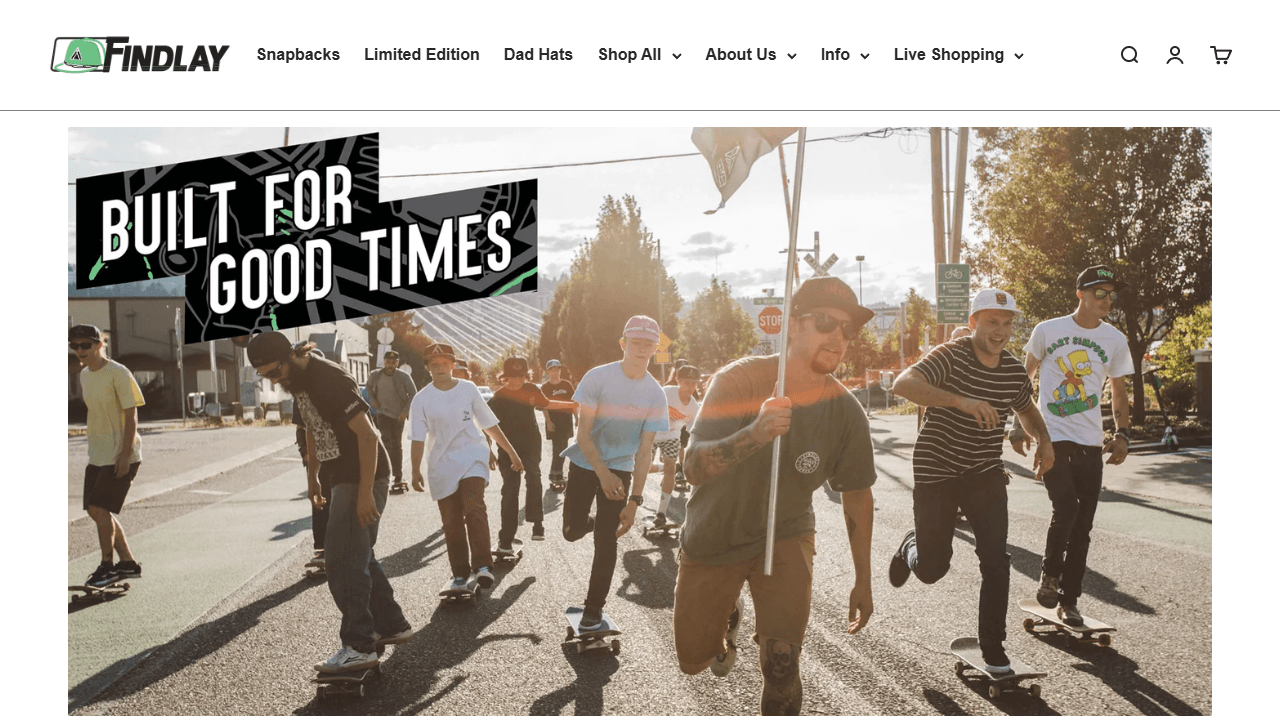
Unlike heritage brands that look backward, Findlay looks forward, catering to the action sports demographic (skaters, snowboarders).
Their core differentiation is the 'Stampede Lace,' a patented system that allows the wearer to secure the hat to their head during vigorous activity.
This simple, functional modification transformed a standard commodity (a snapback cap) into a piece of technical gear.
A Commitment to Quality
Findlay operates a model of 'value-added assembly.' While the base chassis of the hats may be sourced globally (a common reality in the apparel headwear industry due to the lack of domestic hat factories), the customization, grommeting, embroidery, and lace assembly are performed in their Portland warehouse.
This allows them to maintain a 'Made in USA' (or 'Assembled in USA') claim for the finished value.
Their manufacturing is highly agile.
A team of 12 employees manages production, marketing, and fulfillment from a single location.
This allows for rapid prototyping and limited-edition 'drops,' a strategy that keeps their engaged digital community constantly returning to the site.
The manufacturing process involves careful quality control at each stage, from inspecting base components to ensuring proper tension in the patented lace system.
Each hat undergoes testing to ensure the Stampede Lace system works reliably under stress.
Findlay offers a lifetime warranty on their hats.
This warranty is a manufacturing promise: it asserts that the grommets will not pull out and the stitching will not fray.
Portland Bee Balm
"Urban apiarist lip balms made with Pacific Northwest beeswax and essential oils."
The Story Behind the Brand
Portland Bee Balm is a micro-manufacturer that has scaled by staying small.
Founded by Brad Swift, an urban beekeeper, the company began as a project to create a better lip balm for his wife using wax from his own hives.
The narrative is one of purity and localism.
The manufacturing process is intentionally low-tech.
The ingredients are melted and poured in small batches in their Southeast Portland facility.
The formula is simple: Pacific Northwest beeswax, organic cold-pressed oil, and local essential oils (like Oregon Mint).
A key differentiator for the brand is its packaging.
Instead of the standard plastic shrink wrap or glossy paper labels, Portland Bee Balm uses real wood labels.
This tactile element immediately sets the product apart on the shelf and reinforces the 'natural' brand promise.
The Art of Handcrafted Excellence
The production process begins with sourcing beeswax from local beekeepers across the Pacific Northwest, ensuring traceability and supporting regional agriculture.
The beeswax is filtered to remove impurities and tested for purity.
Organic cold-pressed oils—typically jojoba, coconut, or sweet almond oil—are carefully measured and combined with the beeswax in precise ratios.
The mixture is heated gently in double boilers to avoid scorching, then allowed to cool slightly before essential oils are added.
Portland-specific botanicals like Oregon mint, Douglas fir, or rose geranium are steam-distilled to capture their volatile oils.
The liquid mixture is poured into tubes or tins while warm, ensuring smooth filling and proper setting.
The packaging process involves hand-applying wooden labels, which are laser-engraved with the brand logo.
These labels are sealed with natural beeswax, creating a completely plastic-free package.
The brand is a member of '1% for the Planet,' tying its financial success to ecological health.
This makes the product a 'guilt-free' gift, perfect for stocking stuffers or checkout-counter impulse buys.